


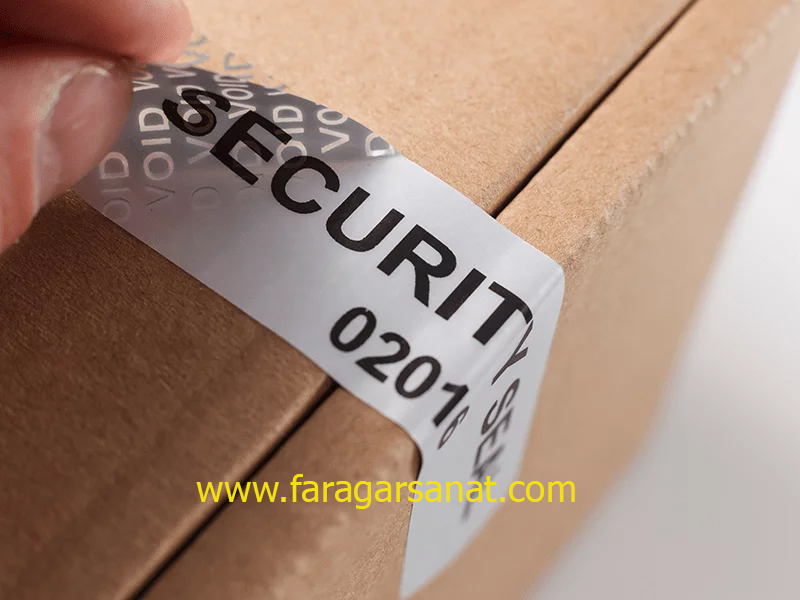
Imagine purchasing a product that, once opened, shows no sign of authenticity or integrity. This scenario is no longer hypothetical—counterfeiting technologies have become more sophisticated, and manipulation methods increasingly precise. In such a situation, security labels are no longer a luxury option but a necessary protective layer to safeguard assets, customer rights, and brand reputation. This text clearly explains why, in 2025, installing security labels has become a practical requirement and which solutions offer the highest effectiveness.
You will learn how VOID labels simplify warranty claim processing by instantly revealing tampering, how hologram labels strengthen authenticity while preserving the visual appeal of packaging, and how other types of security labels protect products and documents. We will also provide guidance on choosing suitable labels for glass surfaces, introducing proven examples, and methods for integrating physical labels with digital tracking systems. If you want to know which technology is most cost-effective for your product and how phased implementation reduces risks, this article gives you practical answers and research resources for purchasing and testing samples. Reading the continuation of this article will help you make smarter decisions.
Why are security labels no longer an option in 2025, but a necessity?
The increasing complexity of supply chains and the rise of digital authentication have made it essential for every physical product to include a trackable protective layer before entering the market. In 2025, industrial counterfeiting occurs through more subtle methods, with abusers using 3D printing technologies and secondary distribution networks to create counterfeit versions. Investing in physical protection like specialized labels reduces companies’ financial and legal risks and strengthens consumer protection. Companies that prevent counterfeit products before they cause damage significantly reduce recall costs and reputational losses.
Threat analysis and the role of labels in preventing tampering
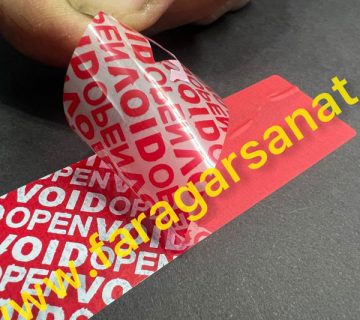
Common threats include replacing electronic components, falsifying warranty history, and inserting low-quality items into original packaging. An effective solution is to use technology that reacts visibly when removed or opened; for this purpose, VOID labels serve as an immediate visual indicator of tampering attempts. In sensitive industries such as medical electronics or automotive parts, this capability prevents unsafe products from circulating within distribution networks and simplifies the processing of warranty claims. Moreover, physical evidence of tampering facilitates legal follow-up and fraud verification when necessary.
Overview of key technologies: from holograms to destructible labels
Combining several technologies increases the level of protection. For example, hologram labels not only offer an impossible-to-replicate visual effect but can also be paired with variable printed identifiers so each product batch has a unique holographic code. Destructible labels break into powder-like fragments when removed, eliminating the possibility of reuse. For products requiring protection of variable information, security scratch panels and one-time codes ensure authenticity upon first use. Choosing the right combination should be based on product risk, unit value, and weak points in the supply chain.
Materials and design: how to choose the right label for each surface
The contact surface, substrate type, and environmental conditions determine the material and adhesive composition. For example, glass products that require clarity and high durability benefit from dedicated security labels that provide transparency and tensile strength—making **glass security labels** ideal for cosmetics and open-top packaging. In contrast, industrial components exposed to heat or solvents require polyester films with high-resistance acrylic adhesives. The design should include traceable elements such as barcodes or micro-print markers so that, during laboratory inspection, evidence of tampering becomes undeniable. When choosing labels, factors such as double-sided readability, tensile strength, and peel-off behavior must be reported with numerical, test-based results.
Practical implementation and integration with digital solutions
Successful deployment requires coordination among production, quality control, and IT departments to ensure labels are applied at appropriate, trackable stages. Connecting inventory management systems to a database of unique label identifiers enables tracking from manufacturing to point of sale, and authenticity can be verified instantly through barcode scans or authentication apps. Using AI to analyze scanned images can detect counterfeiting patterns and, through deep learning algorithms, predict the likelihood of tampering based on historical data. Phased implementation and pilot testing across limited SKUs reduce production disruption and reveal which technical combination is most economically viable.
Costs, sourcing, and the role of trusted distributors
The cost per label varies based on technical complexity and production volume, but cost analysis must include potential reductions in losses from counterfeiting and increased customer trust to present a complete ROI picture. Sourcing from trusted, certified suppliers ensures quality-control standards and material compliance. In this regard, **www.faragarsanat.com**, which provides sample testing and technical certifications, can streamline the decision-making process. Ordering samples and conducting field tests before signing long-term contracts reduces financial risks and reveals which label performs best in terms of durability and readability.
Use-case examples and practical tips for different industries
In the pharmaceutical industry, combining holography with unique codes prevents counterfeit drugs from entering distribution networks, and centralized scan data enables tracking problematic batches. In consumer electronics, applying tamper-evident labels to device bodies records every opening attempt and optimizes warranty processes. Companies seeking to protect brand reputation in retail environments can use custom labels with corporate designs and micro-print features to maintain packaging aesthetics while increasing security. To facilitate implementation, **www.faragarsanat.com** offers customizable samples tailored to industry standards and can assist in drafting supply agreements and pilot deployments.
A practical roadmap for authenticity protection: from evaluation to implementation
In practice, security labels are more than just a technical solution—they are tools for risk reduction, legal traceability, and enhanced customer trust. Clear steps for implementation include: 1. Data-driven analysis of supply-chain risks and product unit value; 2. Choosing the correct combination of technologies (VOID, hologram, destructible labels, or one-time codes) based on threat level and surface type; 3. Ordering samples and conducting environmental and adhesion tests to confirm real-world performance; 4. Integrating label identifiers with inventory management and authentication systems; 5. Running a limited pilot with measurable KPIs (tamper-detection rate, reduced warranty claims, customer feedback).
For every technical decision, always consider cost-benefit criteria and consumer-information flow. The right security label can eliminate the expense of a single counterfeiting incident and enhance user experience. Continuous data monitoring and adjusting technology combinations based on emerging fraud patterns make your defense strategy more effective.
Every label applied is not just a physical safeguard but a symbol of your commitment to quality and transparency; precise protection is an investment in your company’s reputation.



Leave a Reply