


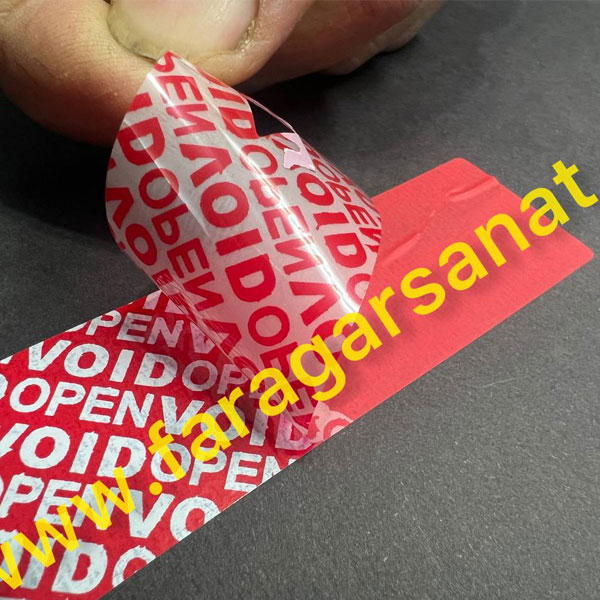
Imagine a package traveling a long path from origin to customer; a single piece of tape or a security label can determine the difference between a safe product and a tampered one. This article explores the growing complexity of the supply chain and emerging security pressures in 2025, explaining why VOID labels have become one of the most critical tools. It covers how VOID labels work, their technical differences from hologram labels, practical applications in office-door sealing and sensitive packaging, and technical tips for selecting and installing security seals. We also explain specialized variants such as non-residue security seals and combined solutions that enhance security effectiveness. If you are looking to purchase or research VOID labels, hologram labels, or security seals, this article offers practical guidance and real examples to support your decision-making. At the end, we highlight the challenges and opportunities of 2025 and the convergence of physical labels with digital systems. Reading the continuation of this article will help you choose the most suitable product and monitoring procedures to minimize risk and increase confidence.
Why do VOID labels become a vital security requirement in 2025?
In 2025, the complexity of supply chains and the volume of shipped goods have increased the need for simple yet effective tools to prevent tampering, and VOID labels are among the most reliable of these verifiable solutions. When removed or tampered with, the label leaves a visible trace that allows inspectors or customers to detect unauthorized opening. Using this type of label reduces the risk of returned or altered items and demonstrates a commitment to product authenticity. Organizations aiming to protect their reputation and strengthen trust across the supply chain can significantly reduce losses from counterfeiting and damage by applying these labels to sensitive areas.
Technical differences between VOID labels, hologram labels, and other security labels
VOID labels are distinguished by their mechanism of displaying a word or fixed pattern when removed, whereas hologram labels are typically identified by light reflections and three-dimensional images. While hologram labels enhance visual appeal and create a recognizable identity layer, VOID labels serve as concrete evidence of tampering. Some hybrid security solutions combine both types to display brand identity while also recording any attempt to open the package. Choosing between these technologies should be based on threat level, surface type, and legal tracking requirements.
Practical applications: from office-door sealing to sensitive packaging
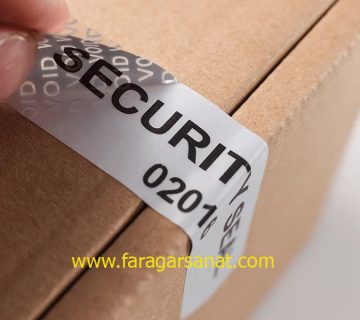
In office environments, VOID labels can play a key role in sealing office doors and proving that entry points have remained closed during specified hours. For companies storing confidential documents or research samples, the label serves as proof of no tampering. In electronics and valuable component packaging, placing VOID labels on cartons or internal covers quickly reveals unauthorized access and prevents damage caused by re-sealing attempts. A practical example: a software company shipping discs and accessories used VOID labels to prevent package opening during transit and reduce customer claims regarding incomplete items.
Making the right choice: technical tips for purchasing security seals and their types
When purchasing security seals, several factors must be considered, including surface type (metal, glass, laminate), installation environment (temperature and humidity), and the need for numbering or barcoding for traceability. Non-residue security seals are suitable for surfaces that may require resealing after inspection because they leave no trace upon removal while still preventing reuse and counterfeiting. In some cases, combining heat-resistant layers with specialized adhesives for oily or painted surfaces is necessary. Reputable manufacturers offer customization options including logo printing, serial numbering, and micro-text to enhance traceability and anti-counterfeit capability. For standard samples, you can use trusted distributors such as www.faragarsanat.com.
How proper installation and inspection of VOID labels help reduce risk
Proper installation of a VOID label involves cleaning the surface from grease and dust, applying uniform pressure, and recording installation details such as date and installer name to ensure transparent future inspections. Regular inspection—by documenting or scanning the serial number of each label—enables quick anomaly detection and verifies that the seal has remained intact. For example, in a distribution center, the quality-control team used an electronic label list to identify areas with the highest seal damage and diagnose root causes; this led to improvements in packaging processes and a 30% reduction in damage claims. During inspections, attention should be paid to color changes, pattern shifts, or hidden messages beneath the surface, as these elements often indicate tampering.
Organizational implementation: policies, training, and oversight with help from www.faragarsanat.com
Successful implementation requires formal sealing policies that define access levels, installation responsibilities, and inspection procedures. Staff training should combine technical guidelines with practical field exercises to eliminate operational errors. For example, creating a protocol where each label is scanned before installation ensures transparency and enables traceability in case of disputes. Working with reputable suppliers allows access to advanced, certified models; for ordering and receiving technical advice on label types and their capabilities, www.faragarsanat.com can serve as your supplier and project consultant. Alongside product selection, periodic monitoring using digital tools and consistent reporting exposes hidden risks and reduces unnecessary costs.
Cost-benefit analysis and real-world examples of risk reduction with security labels
Cost-benefit analysis shows that even a relatively small investment in VOID labels can prevent significant losses from counterfeiting, unauthorized returns, and damage claims. For example, in cargo transport, using security seals on carriers has reduced shipment theft and accelerated insurance dispute resolution. Combining multiple label types—such as using a hologram label on the front and a VOID label on sensitive points—creates a multi-layered defense that makes counterfeiting more difficult and expensive. A practical recommendation for managers: before full-scale deployment, run a pilot project to optimize adhesive type, design, and inspection procedures based on real-world data.
Challenges and opportunities for 2025
Increasing counterfeiter expertise and access to advanced printers present challenges for security technologies, but advances in adhesives, micro-text, and digital solutions provide new opportunities to enhance label performance. The key opportunity for companies in 2025 is the convergence of physical labels with digital systems; online registration of serial numbers and matching with a central database enable authenticity verification at any point in the supply chain. With proper planning, appropriate label selection, and collaboration with reliable suppliers, businesses can mitigate growing threats while strengthening customer trust. In this process, technical advisors and suppliers such as www.faragarsanat.com can offer practical guidance and customized products.
From a mark to assurance: a practical roadmap for implementing VOID labels at every critical point in the chain
A VOID label is more than a visual marker; when properly selected and installed, it becomes a practical tool for reducing tampering, speeding up investigations, and improving organizational credibility and customer trust. To move from theory to practice, start by listing critical points in the chain, testing different security seals on real surfaces, and running a short pilot project to collect real data on adhesion and durability. Simultaneously, numbering or barcoding and online registration of each label allow quick authenticity verification at every stage. Training installation and inspection teams and clarifying responsibilities eliminate many human errors. At a strategic level, combining the physical layer (VOID label) with digital layers such as a central database and periodic reporting provides optimal protection. The ultimate advantage of this simple yet effective approach is reduced counterfeiting and damage claims and increased customer confidence. Your next step should be practical testing of a key point with defined metrics—because a good VOID label not only prevents unauthorized opening but also serves as a seal of trust that protects your product’s reputation.




Leave a Reply